-
18-year-old Alex Yang founded an AI startup with students around the world he met online.
-
The team of high schoolers aims to improve Alzheimer's diagnostics through AI intervention.
-
Their startup launched an AI therapy product to help Alzheimer's patients with memory recall.
My typical morning starts around 3 a.m. I'm instantly met with Messenger notifications from web developers in California, GitHub pings from Florida, and a running document of research papers to read sent from Michigan. By 7:50 a.m. I'm off to class to live my life as an 18-year-old high school senior in Seoul.
This solitary ritual has become my strange normal after I founded an AI research and development startup with people all around the world, whom I've never met in person. My ambition was to improve Alzheimer's diagnostics, but I had no network, so I built one online.
I've always viewed Alzheimer's as a terrifying disease
Growing up, I heard stories about various family members battling Alzheimer's. I viewed the disease as something truly terrifying, which leaves behind only the shell of who someone once was.
I'd grown up knowing that someday, someone I love might disappear while still standing in front of me. In high school, this fear crystallized into something beyond passive acceptance.
I came across this competition, looking to fund ideas that can make health more accessible, and decided to apply.
BI's Young Geniuses series spotlights the next generation of founders, innovators, and thinkers who are trying to reshape industries and solve global challenges. See more stories from the series here, or reach out to editor Jess Orwig to share your story.
I knew I couldn't do the work alone. I had to find people beyond my network with diverse perspectives and skills capable of building something real together.
I started searching for partners by spending my time on internet forums and pitching my vision. I posted detailed research proposals on Discord servers and created GitHub repositories with preliminary code.
After a month of "nos," I got one "yes" from California. Then Florida. Then Michigan. Until there were six of us. We named ourselves Reteena (pronounced like "retina"), a deliberate wordplay symbolizing our mission to bring new vision to Alzheimer's diagnostics.
We became something none of us expected: a team of high schoolers from around the world who genuinely believed we could fix Alzheimer's.
My team and I decided to make Alzheimer's diagnostics more accessible and affordable
I didn't set out to target only high schoolers, but I was on servers mainly for students, and those were the people who responded.
latest_posts
- 1
 Floods, Landslides Triggered By Heavy Rain In Afghanistan Leave 77 Dead In 10 days, Authorities Say
 - 2Bahrain cracks down on dissent as war grinds on
- 3Wonderful Sea shores All over the Planet
- 4Releasing Learning Experiences: A Survey of the \Learning Made Fun\ Instructive Application
- 521 Things You Ought to Never Tell Your Childless Companion




- Elanco's drug gets emergency nod to treat deadly flesh-eating parasite in cats
- German finance minister seeks better market access in China talks
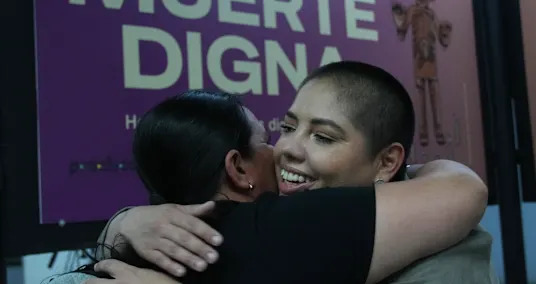
- As her kidneys fail and time runs short, this activist fights to decriminalize euthanasia in Mexico
- The Solution to Flexibility: Developing Internal Fortitude Notwithstanding Misfortune
- Figure out How to Recognize Early Indications of Depressions
- Council removes proposal to rename park named after former president of Israel
- IDF destroys two-kilometer-long Gaza terror tunnel in Beit Lahiya
- Pope Leo XIV calls for urgent climate action and says God’s creation is 'crying out'
- A single shot of HPV vaccine may be enough to fight cervical cancer, study finds