When you buy through links on our articles, Future and its syndication partners may earn a commission.

Eager skywatchers will soon have front-row seats to a rare cosmic encounter as interstellar comet 3I/ATLAS makes its closest approach to Earth, and you can watch it happen live online.
The Virtual Telescope Project will host a free livestream starting at 11 p.m. EST on Dec. 18 (0400 GMT on Dec. 19), sharing real-time telescope views of comet 3I/ATLAS captured by its robotic observatories in Manciano, Italy, weather permitting.
Comet 3I/ATLAS will make its closest approach to Earth at 1 a.m. EST (0600 GMT) on Dec. 19. At that time, it will be about 1.8 astronomical units away — roughly 168 million miles (270 million kilometers), nearly twice the average distance between Earth and the sun.

Discovered in July 2025 by the ATLAS (Asteroid Terrestrial-impact Last Alert System) survey, 3I/ATLAS quickly captured the attention of both scientists and the public. It is only the third confirmed interstellar object ever detected passing through our solar system, following 1I/'Oumuamua in 2017 and 2I/Borisov in 2019. Researchers are especially interested in its composition and behavior, which could offer rare clues about how planetary systems form around other stars.
The comet is too faint to be seen with the naked eye and will be challenging even for small backyard telescopes. Under dark skies, observers with a telescope of 8 inches or larger may be able to spot it as a faint, fuzzy patch of light. If you're unable to look for the comet in person, you can sit back, relax and enjoy the view from the comfort of your own home via the livestream.
latest_posts
- 1
 Polar bears are rewiring their own genetics to survive a warming climate
 - 2What we know about the Brown University shooting suspect who was found dead, and how police linked him to the MIT killing
- 3Astronomers now say the moon is eating up molecules from Earth’s atmosphere
- 4South Carolina measles outbreak grows by nearly 100, spreads to North Carolina and Ohio
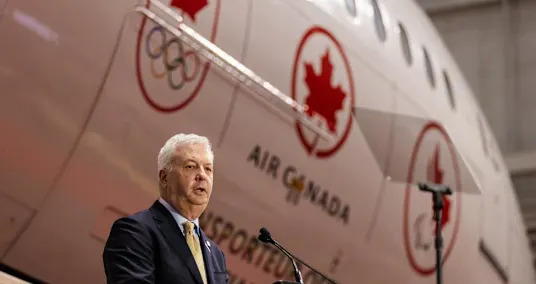
- 5Air Canada CEO To Resign After Backlash—Here’s Why Communication Skills Is Now A Leadership Requirement


- French high-speed train slams into truck, killing TGV driver
- Knesset sets special panel to fast-track Karhi’s communications reform
- Figure out How to Consolidate Cutting edge innovations in Senior's SUVs
- The Best Games Crossroads in History
- Which camera do you believe is great for first-time clients? !
- Top Music and Dance Celebration: Which One Gets You Going?
- Experience Unrivaled Sound: Top Speakers You Really want to Hear
- The most effective method to Begin Your Excursion in Gold Venture
- 10 Setting up camp Shelters That Offer Both Excellence and Isolation